Bend
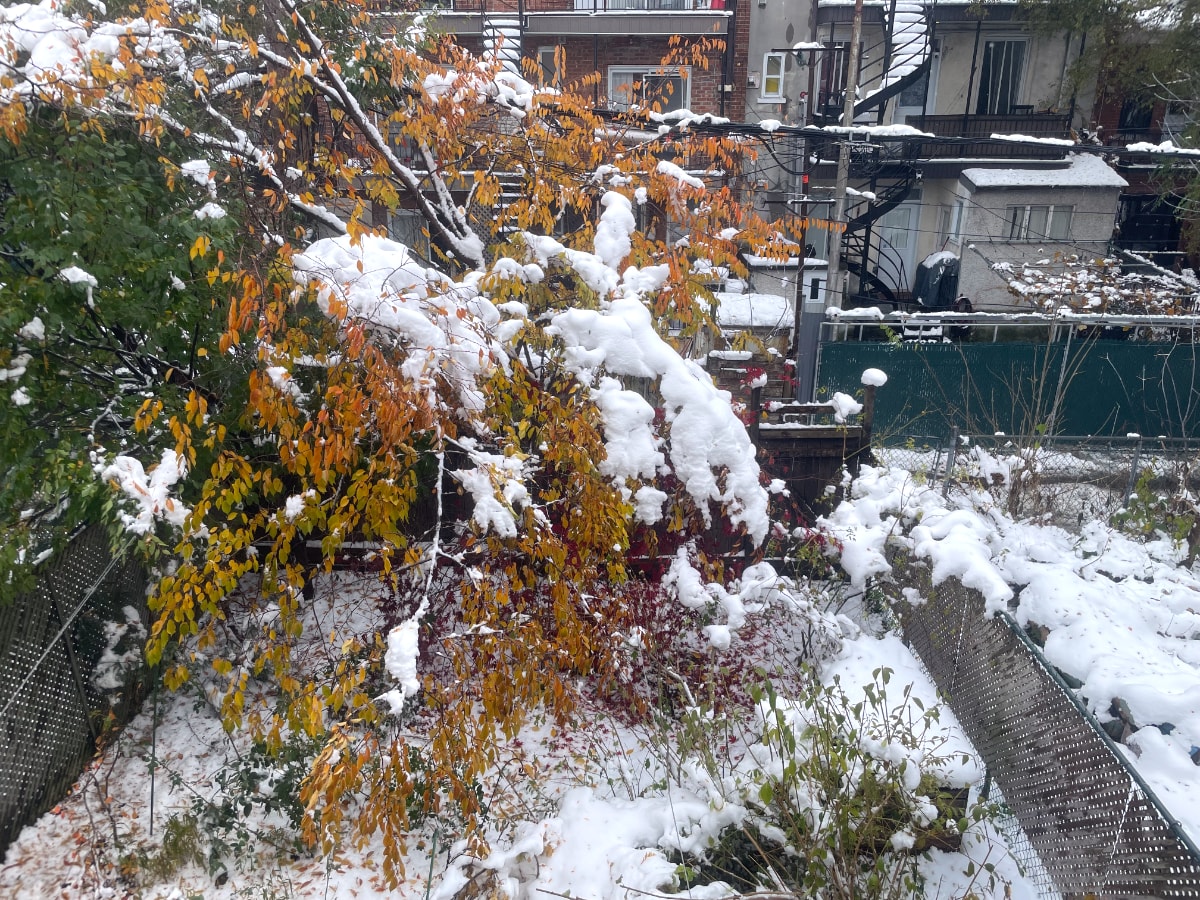
The snow fell too early, barely into November. While we people hadn’t yet put away the bicycles or taken out the shovels or changed the car tires, the city had suddenly turned white as if following a spring storm, the buildings made up with hastily applied makeup, trees disheveled after a rough night.
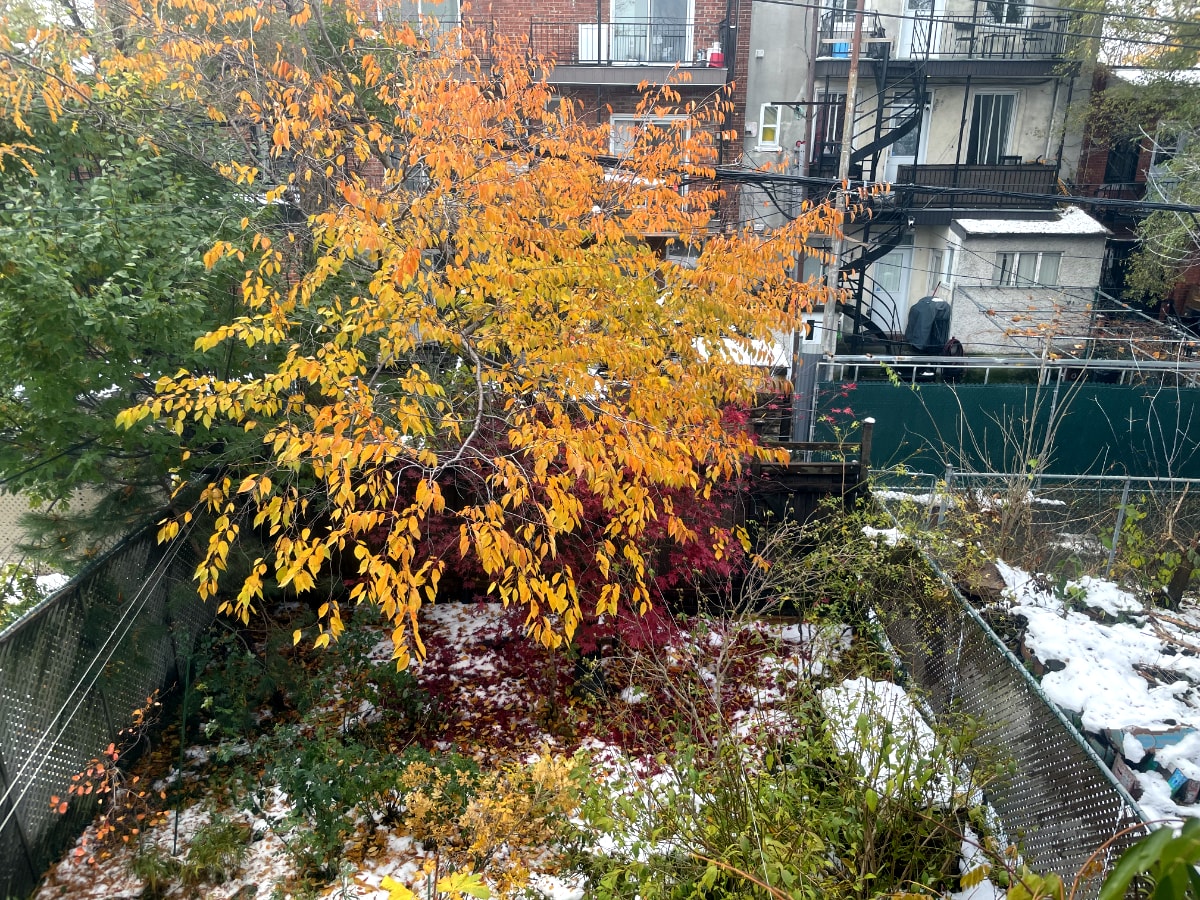
Nothing was ready, then. Autumn hadn’t finished cleaning the branches of their leaves, for many plant species possess this pride of the living, delaying the shedding of what serves almost no purpose anymore—their broad colorful palms, stretched toward the sky, which suddenly became so many receptacles for this wet mass.
The maples, the oaks, the birches: all bent in silent supplication.
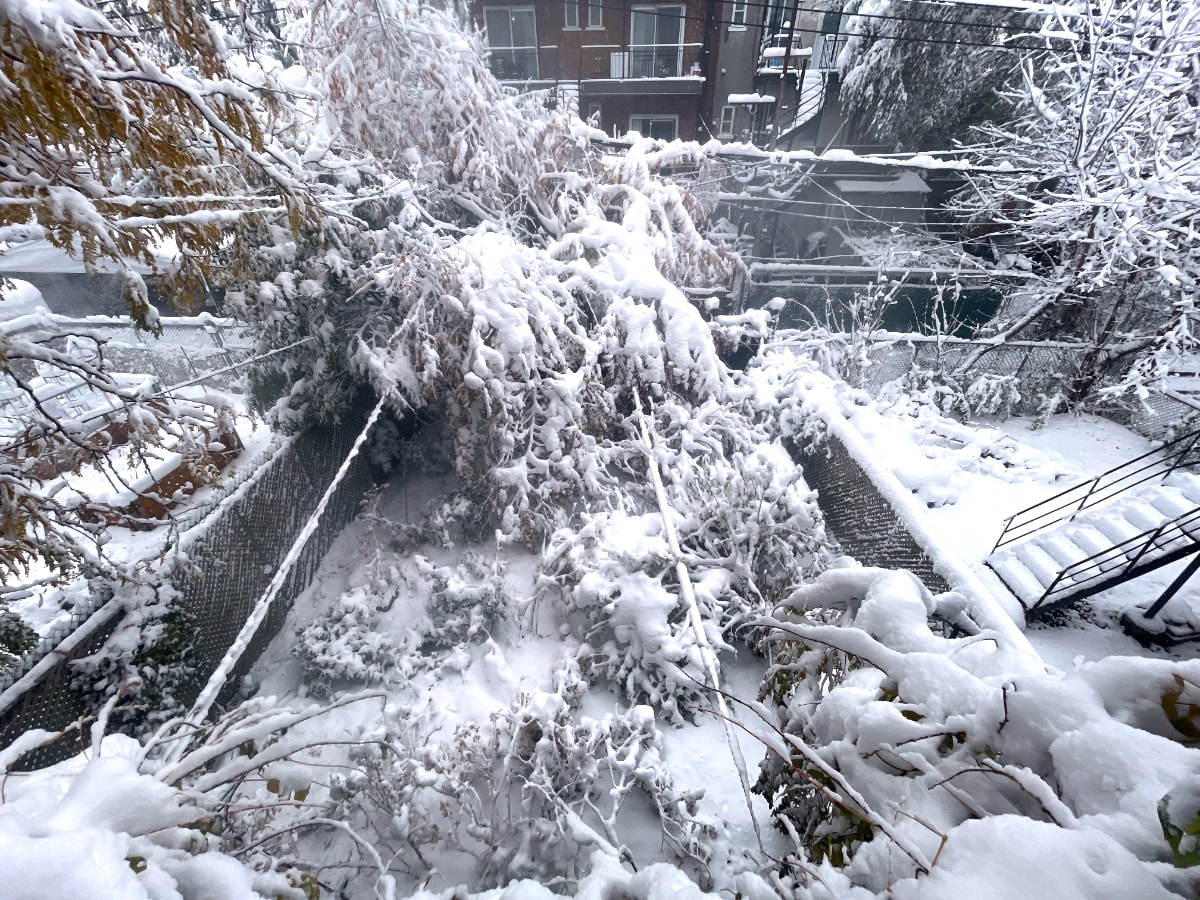
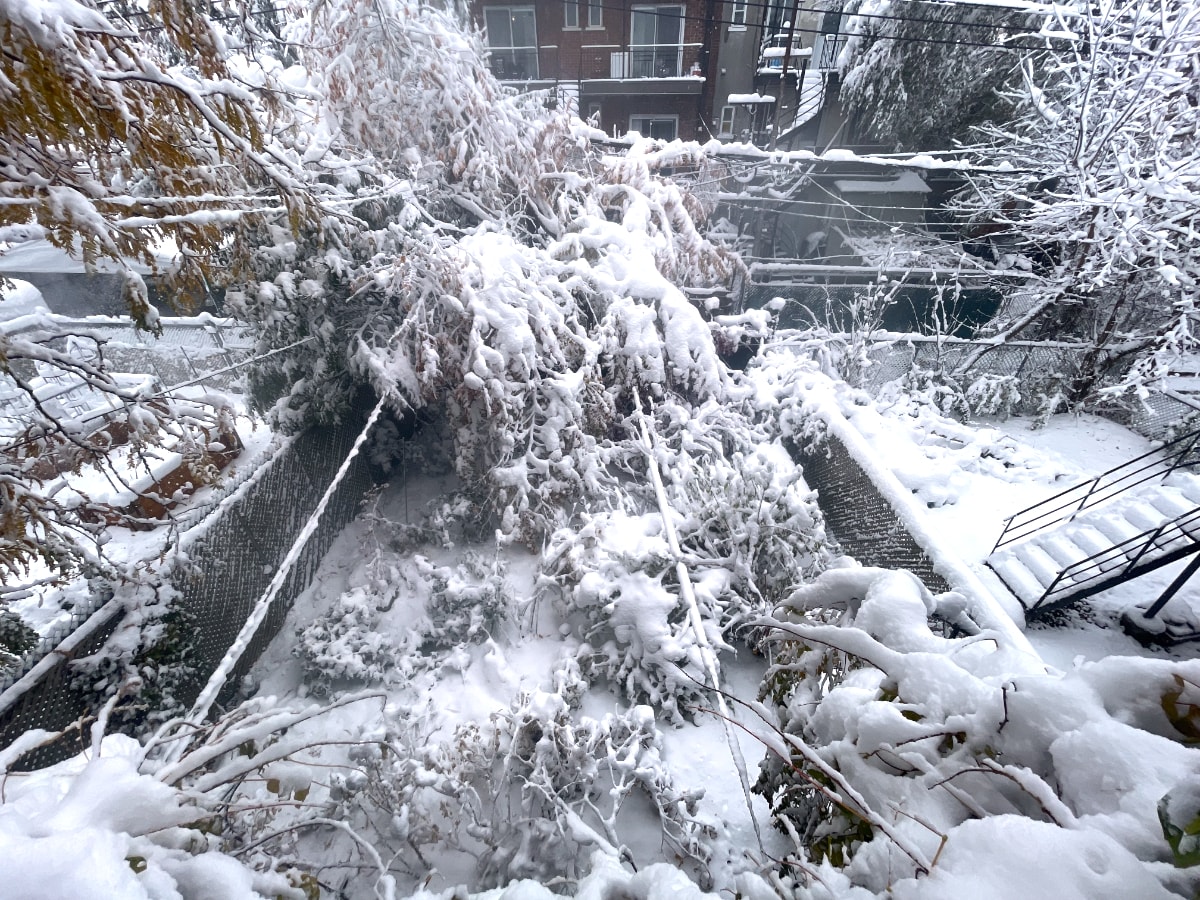
Some didn’t hold. Throughout the night we heard numerous muffled cracks that precede breaks. By morning, branches lay on the sidewalks, blocking streets, crushing parked cars, scraping rooftops. Neighbors came out to contemplate the damage, shaking their heads at their collapsed shrubs, their broken hedges.
In my backyard, the large flowering cherry tree was lying on the ground like a fallen giant. Its branches touched the earth, forming a strange dome under which one could have crawled. I observed it with concern, convinced it wouldn’t recover.
Then the sun returned. An autumn sun that hadn’t yet abdicated its rights, that still warmed with conviction. The snow began to melt, first drop by drop, then in streams. And the cherry tree, slowly, rose up. Branch by branch, it resumed its posture. After two days, it was standing, intact, all its branches swaying softly like so many middle fingers addressed to the wicked storm.
I thought of my own aging body, of those muscles that once lifted effortlessly and that today hesitate, even if, like this cherry tree, it’s capable of bending and adapting. What of my bones that remember every fall, every impact?
When will my own snowfall come? At what point will the weight become too heavy, the bend too deep?
Many of us, but also among animals and plants, could testify to this erosion of capacities. Some rise from these storms. They bend, almost touch the ground, then regain their balance when conditions soften. Others break—a branch here, a joint there—and never quite recover their original form.
But in the end, whether we’re ready or not, whether we still have our leaves or have lost them, winter comes. It always comes.