Peace and love, uncle
"Don't weep, live fully." In his sermon, the priest returns to the words my uncle Alain had reportedly written shortly before his passing. His tone is one of reconciliation, urging us to accept life as it presents itself to us — fleeting, sometimes fluid, sometimes more viscous, heavy to bear. This kind priest, a friend of the deceased, freshly arrived, I believe, from his theology studies in an Africa foreign to our rigid unbelief, where masses are celebrated with dancing, takes my uncle's words and aligns them with the teachings of the Christian faith.
Throughout the service, we are treated to texts by Alain, who had used what little time remained to him to write the final period of his life.
I could say: it all happened so dramatically fast for him, even though I was not with him. In mid-December, he was diagnosed with pancreatic cancer, already in metastasis. In early February, he was gone. Seventy-six years old, whereas just a few months earlier, at another funeral, he had seemed in good health, gentle and smiling as always.
He was my mother's youngest brother. A family of twelve children. My uncle was only ten years older than me. We were, so to speak, of the same generation, with the difference that he was already a teenager when I was barely beginning to form my own sense of the world. He could have passed for a cousin.
I know of only one tragedy in his life, which I had written about in 2011 — the sudden death of his son Christian.
I followed his grief through the lens of his birth chart. Both the mourning of his son and his own fate could be glimpsed through the arcana of the planets. This synchronicity never ceases to astonish me.
Many people came to pay a final tribute to my uncle. A long, rapid line offered condolences, embraces, handshakes, and words of encouragement. Among those receiving them were, of course, his wife Jocelyne, his daughter Élise, and his other son, Guillaume.
"You'll see — your father will begin to speak to you differently, from within," I told him, somewhat pompously, drawing on the grief of losing my own father three years ago. Guillaume showed me his hands: "It's already started," meaning he was already becoming aware of the legacy the dead leave to those who remain.
I also met Mathis, Christian's son, who at the time of his father's death had been only three or four years old. "I was there at your father's funeral. I remember the priest spoke to you to comfort you." Mathis seemed surprised, glanced at his mother, who nodded. I almost said, "You seem to be doing well. You're a fine young man," but that would have been clumsy and odd coming from an old relic like me.
And of course, one gets through it. We have long since stopped dying of grief. Not in our modern world, which pushes us, above all, to live without thinking about temporality.
And yet it is at a funeral that time catches up with us. Watching cousins age as much as we have, we begin to gauge our own vitality against theirs. Some offer confidences they would never have shared in any other setting. The lives of "ordinary" people are such that they would fill far more pages than all the masterpieces combined. So much unspoken reality…
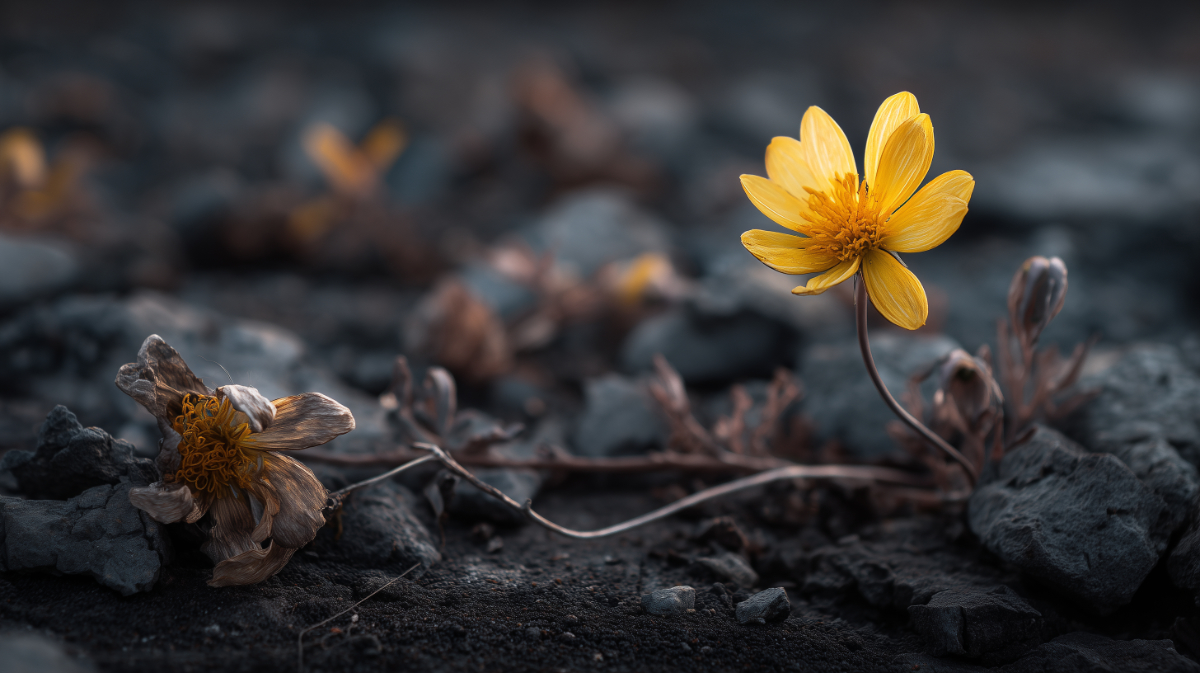
Funerals, as we know, are for the living — so they can stop crying. The real tears, in any case, don't fall at that moment. There are the tears before death, the tears when everything suddenly changes, the silent tears of the suffering that comes from having to support a dying person, and then the tears of the fatal day itself. After that come the stunned tears, and then, like a rain that weakens, the tears of a funeral ceremony held in calm. And finally, after the rain — not sunshine, not right away — but the quiet drizzle of resilience.
It was different when Christian died, for he had not finished living in the eyes of those who loved him. It is like losing a son to war, or simply to life. The tears then run deeper. There are no intermittent showers — only storms and hurricanes.
Those tempests end, too.
Not weep? Come now — you said that, uncle, because you had already dried your tears. You seem to have had the wisdom to understand that there was no point in resisting your end. Your body, it seems, refused to tolerate the chemotherapy. Your full and beautiful life had reached the brim of the glass. It was only natural, then, that the time had come to pour its contents into the lake of those who have gone.
It is the season of those who depart, as I wrote not so long ago. But one flowering does not wait for the next. Springs are teeming behind our backs. We are but a small page in a silent, shifting calendar. Elsewhere in the world, entire pages are torn out by demons who couldn't care less about life.
Let us not weep, then. Let us fight in our own way, as best we can, for life — our own, that of those we love, but also that of those we do not.
Alain loved the Beatles deeply, I came to understand. He was a child of the seventies. Rest in peace, uncle. Peace and love.