Republishing "Les Années-rebours". New english translation
"I fear that The Counted Years will be loved for the wrong reasons and by the wrong people." Those were the words my editor used when agreeing to publish my third book. I remember being briefly shocked or disappointed—I no longer quite recall which—by his remark.
I have to admit he was right, though. First, the novel got filed under gay literature, which immediately limited its audience. Second, the only reviews I received came from the gay world. You could add a "third," which is that there were too many explicit scenes falling outside "conventional sensibility."
They say a writer shouldn't think about his hypothetical readership. If he does, he's already lost a good deal of legitimacy, if only in his own eyes. That's debatable, and it also depends on what one is trying to achieve.
I wrote this book for several reasons. I brought back characters people in my circle had liked, especially Lucienne and Rémi from The Casimir Effect. People said they wanted to know what became of them.
At the same time, I was discovering online communication and, with my forties setting in, a taste for reclaiming a youth I hadn't quite lived." Finally, through that same internet that was seeping into our daily lives, I'd met a Brazilian friend whose conversations sometimes inspired, almost verbatim, certain passages—the dialogues between the character Rui and Rémi.
I've lost touch with that theater teacher, Vinicius from São Paulo. There's a good deal of him in The Counted Years, just as his father's life inspired the next novel, Falaise.
You could say The Counted Years blended the biographies of several people, the only common thread being that famous passing time that slips away from us—hence the title, which could have been The Hourglass Years.
In any case, I went back to reading this novel, published in 2004 (and self-republished once before as a commercial ebook in 2012), only to find it needed the fewest corrections—probably because my editor at the time had since hired a professional proofreader. The publishing house had built a real reputation, I believe. A shame that, a few years later, it had to close its doors for reasons that still escape me.
Unlike with Hard Weather, and somewhat as I did with The Casimir Effect, I didn't try too hard to modernize the novel. I only removed a few dated technical and technological references. Lucienne remains as colorful in her speech as ever; Rémi's sexuality, both spontaneous and naive, gets caught up in Luc's showy desire and Stéphane's detachment. A blind, HIV-positive female writer of romance novels rounds out the cast.
The novel could have been packaged together with The Casimir Effect, though I think I managed to make them two separate works.
I reread it from cover to cover, even cutting an entire chapter, which required significant adjustments further along. Beyond that, it mostly came down to trimming sentences here and there to tighten the text. That's my hope, at least!
The translation was done first with ChatGPT, a very structured piece of software. But I didn't stop at its "knowledge" alone—I gave Claude the task of thoroughly comparing what its competitor had produced. Anthropic's model/software seems to me to operate a notch above ChatGPT when it comes to linguistic understanding. Claude seemed able to grasp the author Verville, suggesting English expressions closer to the intended meaning, whereas ChatGPT struck me as a bit more technical.
I got a kick out of reading Claude's comments, which insisted on noting that such-and-such passage was "physical" (read: sexual) but well rendered, or that another was "moving." If language models (LLMs) are capable of translating this well while merely accumulating context through the probability of occurrences, it makes you wonder how our own thinking works—whether we too are nothing more than predictive automatons...
As I mentioned in my previous post, these LLMs won't replace a translator's talent just yet... If only I had the means (and the patience?).
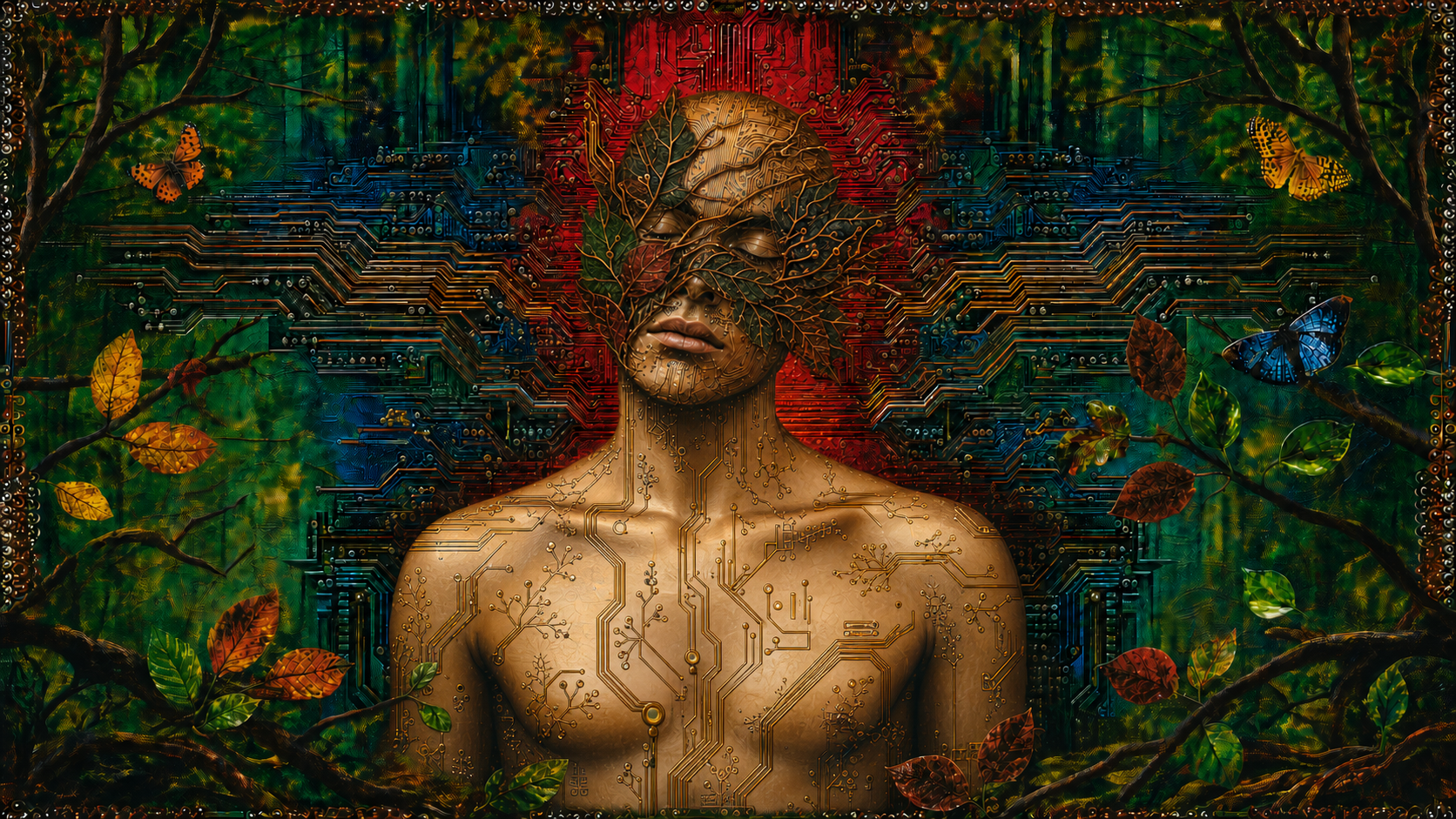
As for the cover illustration, I admit ChatGPT impressed me. I could have reused the illustration from my previous cover, which I'd created from a collage of various photos. That one took me a while! But I wanted something more contemporary.
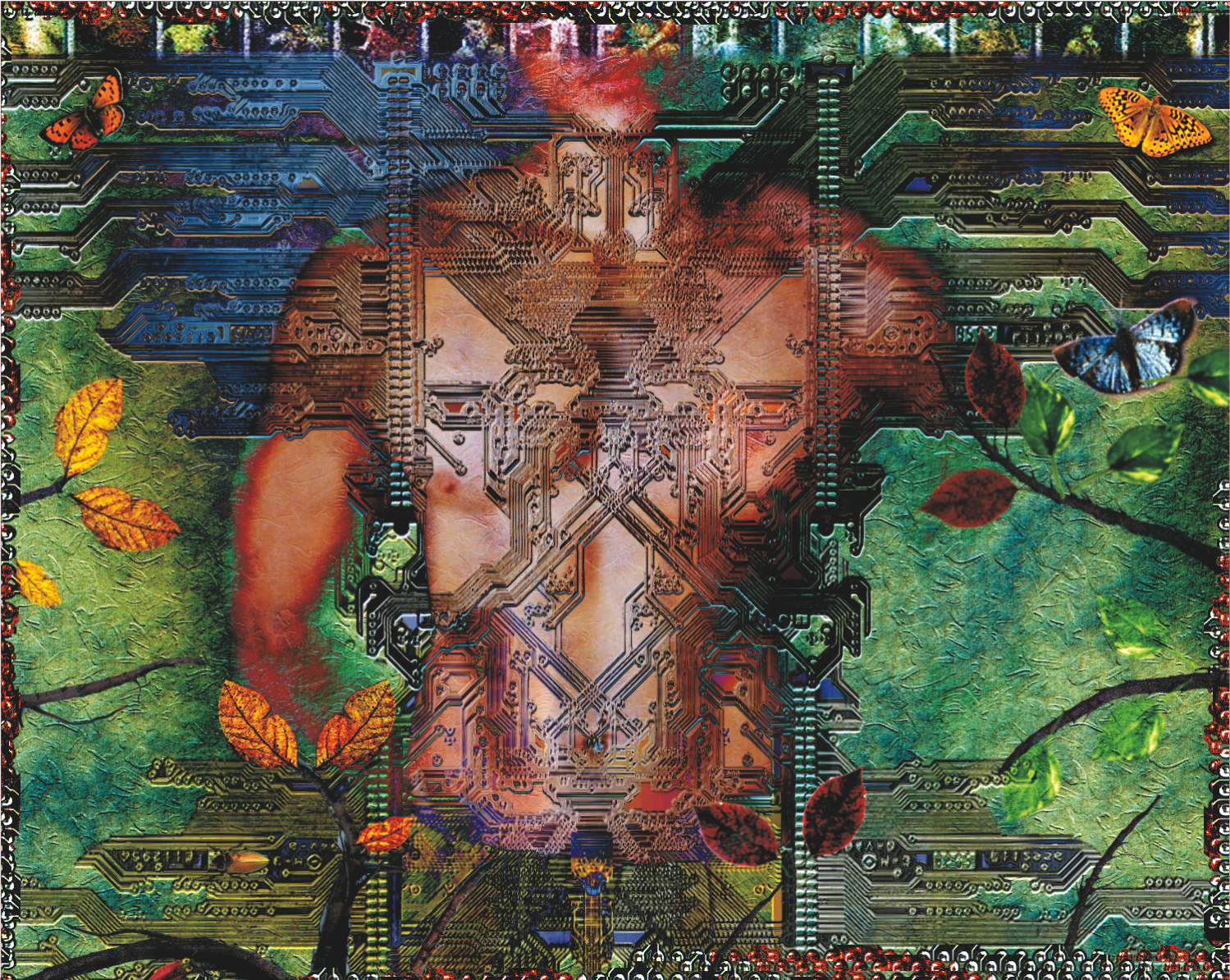
ChatGPT offered me a first illustration, inspired by the previous one, which I found pretty good, but too static and too red.
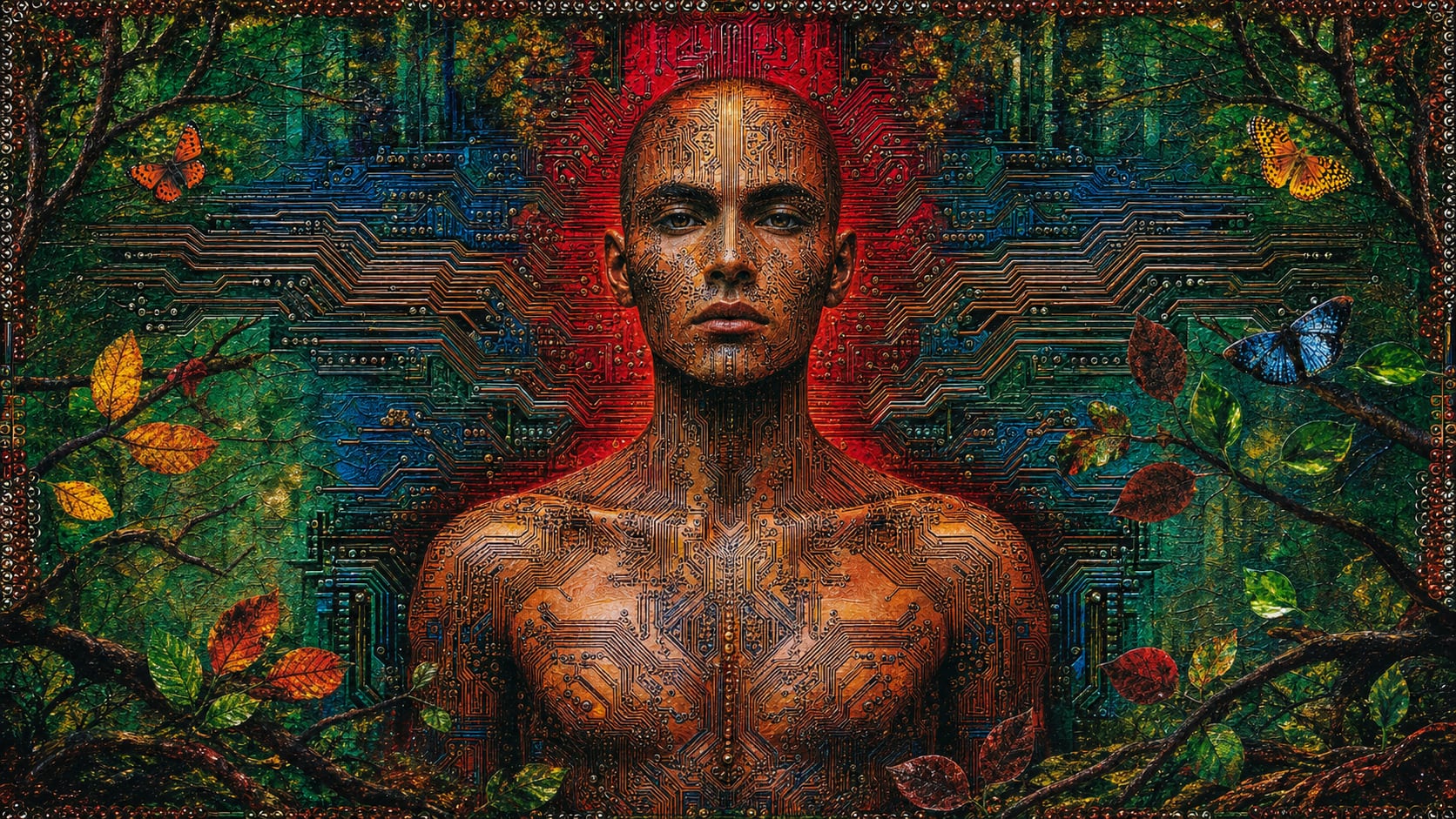
I asked it to make everything brighter, less intense, and to tilt the head and, above all, close the eyes. Also pretty good.
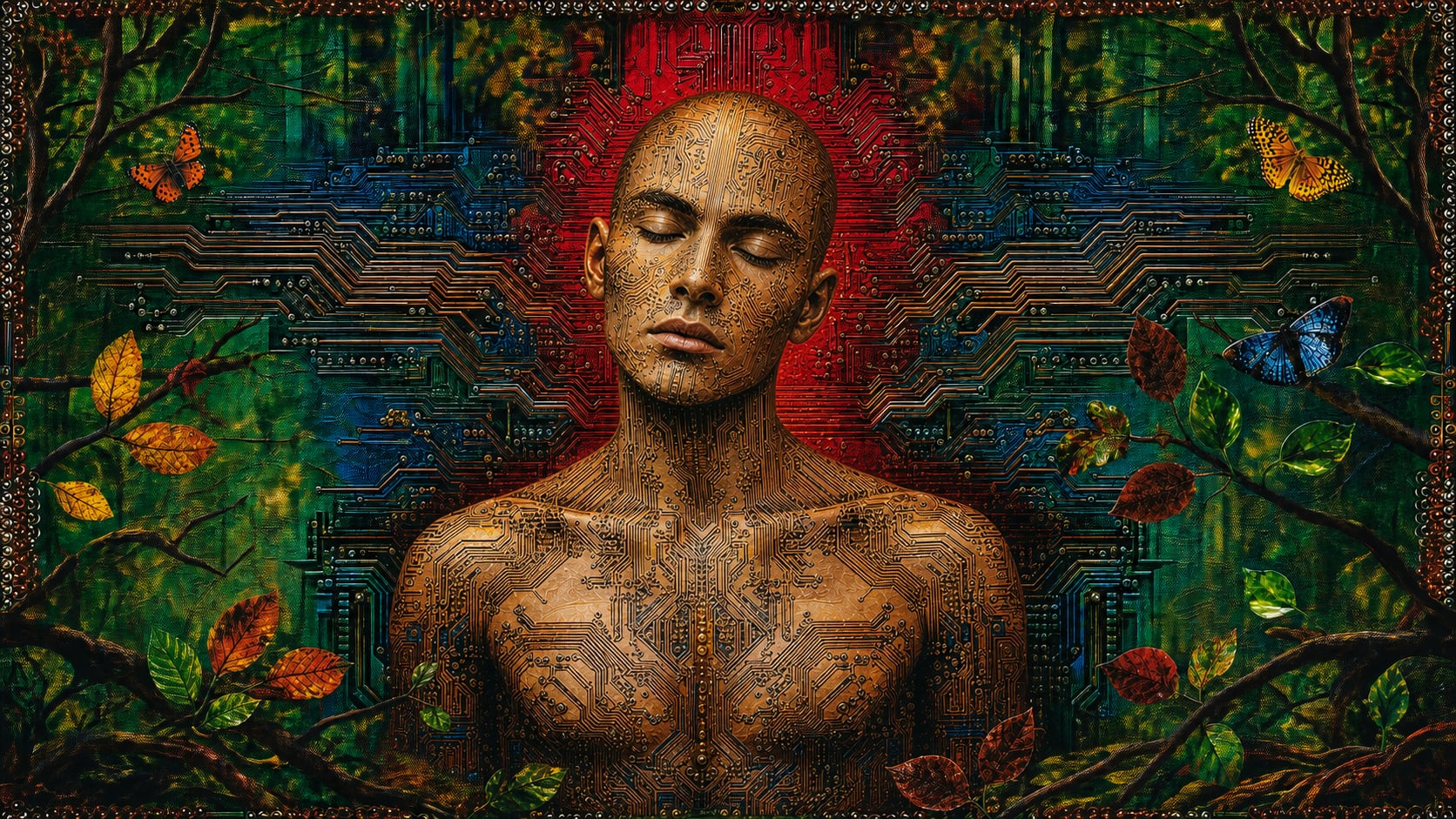
Something was missing that I couldn't quite put my finger on. Finally, I asked to have the face partially masked with something resembling the background, and to rethink the circuits running across the skin. Bingo!
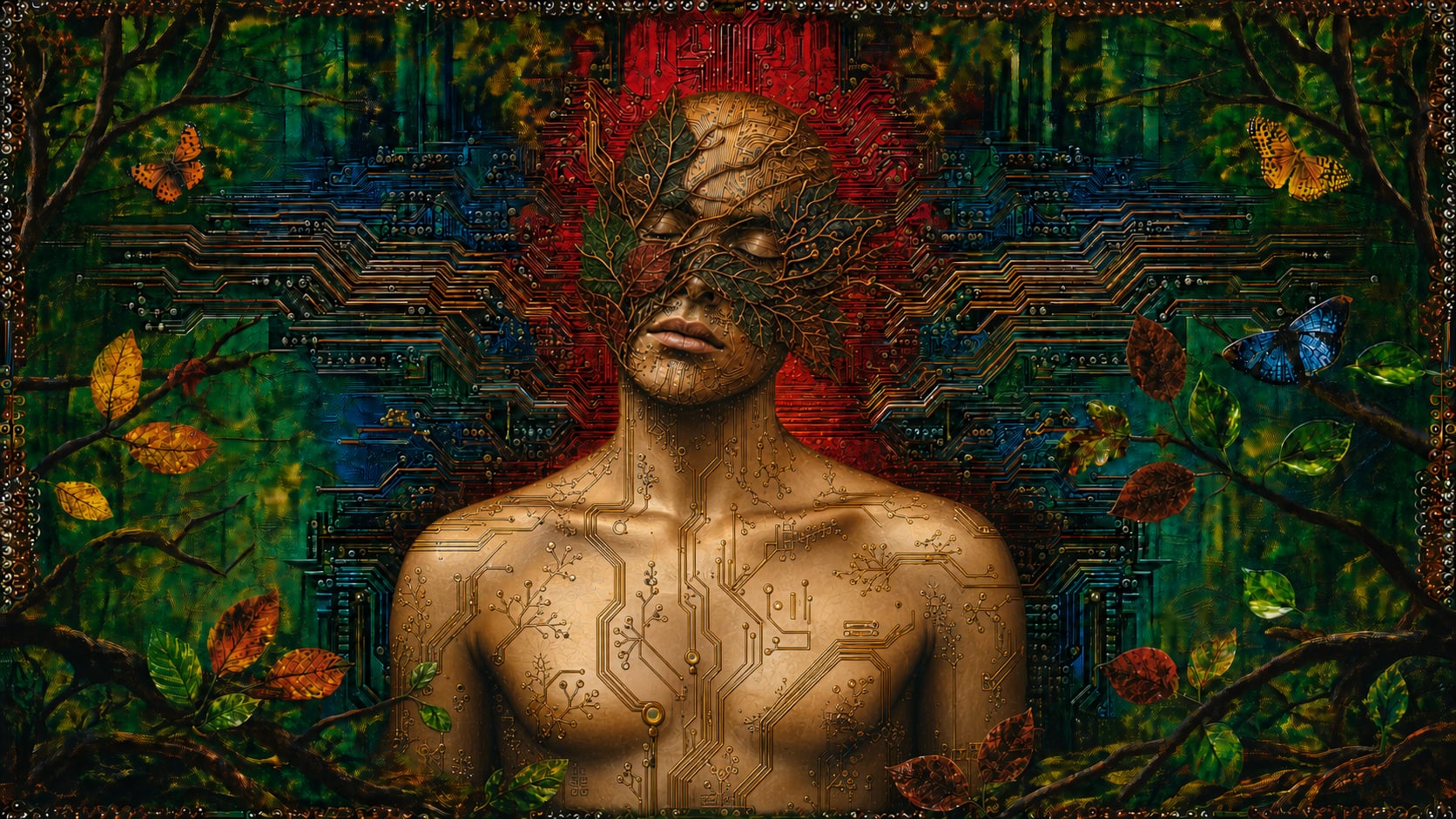
You can read or download the novel here: https://guyverville.ca/en/books/the-counted-years